


Every B2B sales team in the Netherlands recognizes that finding the right leads can make or break an outbound campaign. The challenge lies in reaching decision makers with precision while filtering out low-quality prospects that waste valuable time. By focusing on lead quality metrics and data validation at every stage, you can refine your outreach strategy, improve conversions, and build a healthier pipeline with opportunities that truly fit your business goals.
Table of Contents
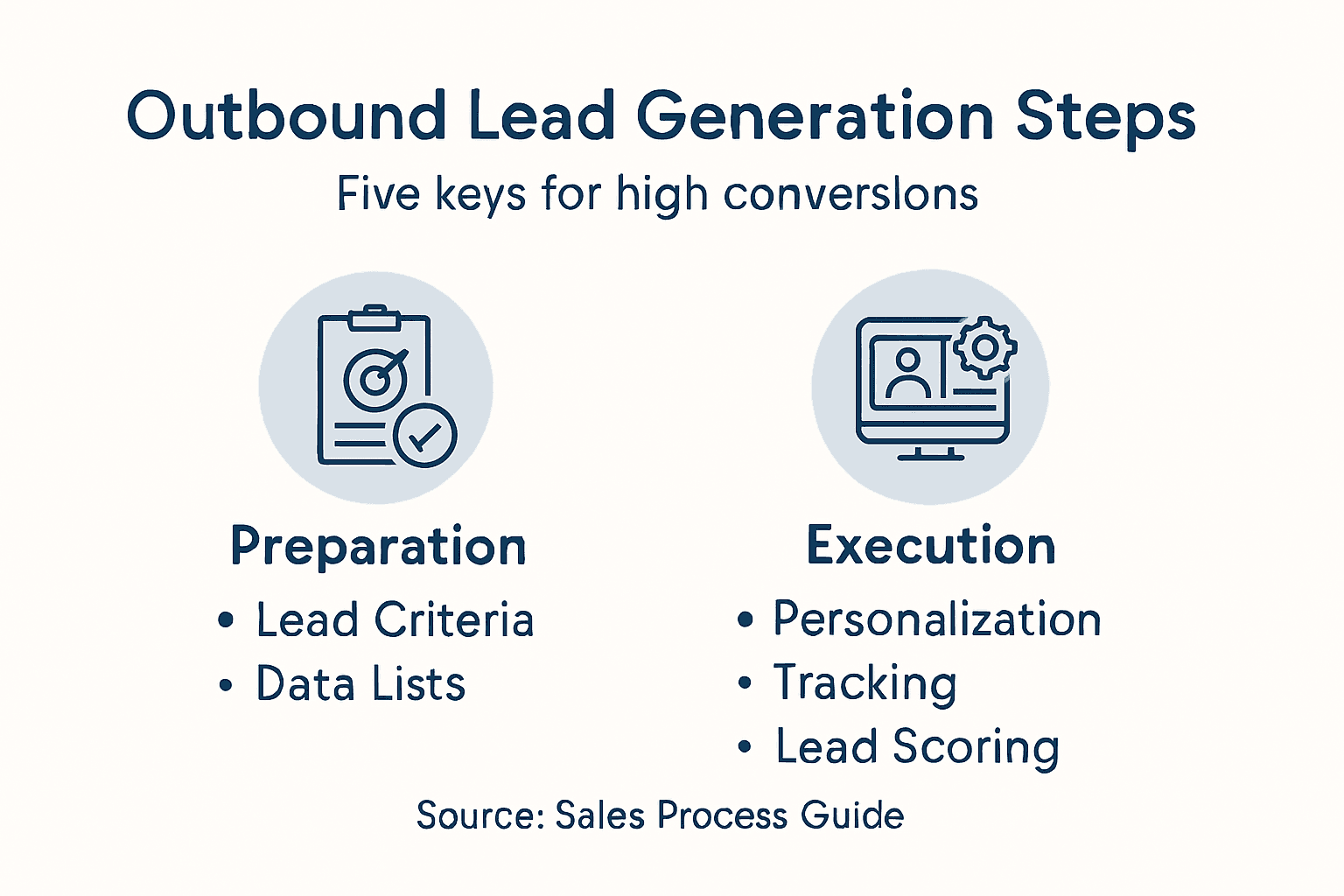
- Step 1: Define Ideal B2B Lead Criteria And Target Segments
- Step 2: Source And Validate Targeted Company Data Lists
- Step 3: Craft Personalized Outreach Messages For Cold Leads
- Step 4: Launch Outbound Campaigns And Track Responses
- Step 5: Verify Lead Quality And Optimize Future Outreach
Quick Summary
| Key Point | Explanation |
|---|---|
| 1. Define Ideal Lead Criteria | Establish specific characteristics for target segments to enhance conversion potential and identify promising prospects effectively. |
| 2. Source Accurate Company Data | Utilize reliable data sources and validation methods to build high-quality contact lists that align with ideal customer profiles. |
| 3. Personalize Outreach Messages | Create tailored messages for cold leads that reflect an understanding of their unique challenges and encourage engagement. |
| 4. Track Campaign Performance | Implement comprehensive tracking systems to monitor engagement metrics across outreach efforts, adjusting strategies based on results. |
| 5. Optimize Lead Quality Evaluation | Regularly review and refine lead scoring methods to ensure only high-potential leads progress through the sales pipeline. |
Step 1: Define ideal B2B lead criteria and target segments
Successful outbound lead generation starts with pinpointing precise target segments and establishing crystal clear lead qualification criteria. Your goal is to create a hyper targeted approach that maximizes conversion potential by understanding exactly who represents your most promising prospects.
Begin by analyzing your current customer base to identify common characteristics that signal high potential. This involves examining firmographic data such as company size, industry, annual revenue, and geographic location. B2B lead sources impact sales effectiveness significantly when you can match these demographic markers precisely. Break down your ideal customer profile into specific dimensions including:
- Organizational size and structure
- Annual revenue thresholds
- Industry vertical alignment
- Technological infrastructure
- Growth stage and market position
- Specific pain points relevant to your solution
Create a scoring mechanism that assigns weighted values to these criteria. Each attribute becomes a quantifiable benchmark for determining lead quality. Companies matching 70% or more of your ideal profile represent prime targets for your outbound efforts. This methodical segmentation transforms generic prospecting into a strategic targeting approach.
Pro tip: Regularly review and recalibrate your ideal customer profile at least quarterly to ensure your targeting remains precise and responsive to market shifts.
Step 2: Source and validate targeted company data lists
Sourcing and validating company data lists is a critical step in building a robust outbound lead generation strategy. Your objective is to acquire high quality business contact information that aligns precisely with your ideal customer profile and ensures maximum campaign effectiveness.
Targeted business prospecting lists provide a strategic approach to identifying potential leads with precision. Begin by selecting data sources that offer comprehensive filtering options such as industry vertical, company size, revenue range, and geographic location. Implement rigorous validation protocols that include cross checking data against multiple sources, verifying contact accuracy, and assessing information currency. Key validation steps involve:
- Verifying company registration details
- Confirming current contact information
- Checking social media and professional network profiles
- Validating website and digital presence
- Reviewing recent business activity and news mentions
Each data point should undergo systematic verification to eliminate outdated or incorrect information. Automated validation tools can streamline this process by performing real time checks and flagging potential discrepancies. Remember that data quality directly impacts your outreach success rate and overall campaign performance.

Here is a summary of the main data validation methods and their impact on outbound lead generation:
| Validation Method | Purpose | Business Impact |
|---|---|---|
| Cross-referencing multiple sources | Increase data accuracy | Higher campaign response rates |
| Verifying registration details | Confirm legitimacy of companies | Reduce risk of wasted outreach |
| Reviewing recent business activity | Ensure contacts are current | Better targeting and engagement |
| Using automated tools | Streamline validation process | Faster list building and hygiene |
Pro tip: Invest in periodic data hygiene processes to maintain list accuracy and remove stale contacts every quarter.
Step 3: Craft personalized outreach messages for cold leads
Crafting compelling personalized outreach messages is an art form that transforms cold contacts into potential business opportunities. Your mission is to create messages that immediately capture attention and demonstrate genuine understanding of the prospect’s unique business challenges.
Start by thoroughly researching each target company, analyzing their digital footprint, recent achievements, and potential pain points. B2B cold leads require strategic outreach that goes beyond generic templated communication. Develop a message framework that includes:
- Specific reference to the company’s recent accomplishments
- Clear indication of how your solution addresses their unique challenges
- Personalized opening that shows you understand their business context
- Concise value proposition tailored to their industry
- Minimal sales pressure with a focus on collaborative problem solving
Each message should feel like a carefully crafted conversation starter rather than a standard sales pitch. Incorporate specific details that demonstrate you have invested time in understanding their business. Use language that speaks directly to their professional context and hints at potential mutual benefits without sounding overly aggressive or impersonal.
Pro tip: Develop a dynamic message template library with modular components that can be quickly customized for different prospect segments and industries.
Step 4: Launch outbound campaigns and track responses
Launching a successful outbound campaign requires strategic planning and meticulous tracking to transform initial contacts into meaningful business opportunities. Your objective is to create a systematic approach that maximizes engagement and provides actionable insights throughout the lead generation process.
B2B outreach strategies demand a comprehensive tracking mechanism that goes beyond simple response rates. Implement a robust monitoring system that captures multiple engagement dimensions such as:
- Initial message open rates
- Response time and quality
- Meeting conversion percentages
- Follow up interaction patterns
- Opportunity pipeline progression
Utilize a centralized customer relationship management system to document every interaction and track the nuanced journey of each potential lead. Configure automated tracking workflows that provide real time analytics on campaign performance. This granular approach allows you to quickly identify which messaging strategies generate the most meaningful connections and adjust your approach accordingly.
Pro tip: Develop a weekly review process where you analyze campaign metrics and recalibrate your outreach strategies based on actual performance data.
Step 5: Verify lead quality and optimize future outreach
Verifying lead quality is a critical process that transforms raw contact data into actionable sales opportunities. Your mission is to implement a rigorous evaluation framework that ensures only the most promising leads progress through your sales pipeline.
Measuring lead quality metrics provides the foundation for strategic sales optimization. Develop a comprehensive scoring system that evaluates leads across multiple dimensions including:
- Demographic alignment with ideal customer profile
- Engagement level and interaction history
- Budget and purchasing authority indicators
- Specific business challenges matching your solution
- Potential for long term business relationship
Establish a structured lead scoring mechanism that assigns numerical values to each qualification criterion. Regularly audit your qualification process by tracking conversion rates and analyzing the performance of leads from different sources. This data driven approach allows you to continuously refine your targeting strategy and eliminate low potential contacts before they consume valuable sales resources.
The following table compares manual and automated lead scoring approaches for B2B pipelines:
| Scoring Approach | Advantages | Drawbacks |
|---|---|---|
| Manual Scoring | Human insight; flexible adjustments | Time-consuming; potential bias |
| Automated Scoring | Consistent; real-time adjustments | May miss context-specific signals |
Pro tip: Create a dynamic lead scoring model that automatically adjusts qualification thresholds based on actual conversion performance across different market segments.
Boost Your Outbound Lead Generation with Verified B2B Data
If you are striving to master outbound lead generation by targeting the right segments and crafting personalized outreach messages you need reliable and precise data to fuel your campaigns. The challenge many face is sourcing high quality, validated company data that aligns perfectly with their ideal customer profile. At DataFacilitator.com, we specialize in delivering targeted, compliant, and up-to-date B2B contact lists designed specifically to meet these needs.
Our solution addresses key pain points such as data accuracy, segmentation by industry and region, and ongoing validation to keep your outreach efforts sharp and effective. With our We handle the leads, you close the deals. – DataFacilitator collection, you gain access to detailed company information that supports every step of your outbound strategy from lead scoring through campaign launch.
Ready to convert cold leads into meaningful opportunities? Experience data transparency with screen recordings before delivery and a pay-per-result model that ensures you only invest in actual leads. Explore our frontpage solutions and see how our verified datasets can transform your sales approach. Visit DataFacilitator.com now to get started and take your outbound campaigns to the next level.
Frequently Asked Questions
How can I define the ideal lead criteria for outbound lead generation?
To define ideal lead criteria, analyze your current customer base to identify common characteristics such as company size, industry, and annual revenue. Create a scoring system to assess these criteria and focus on companies that match at least 70% of your ideal profile.
What steps should I follow to source and validate targeted company data lists?
Start by selecting reliable data sources that provide comprehensive filtering options for your target market. Implement validation protocols like cross-referencing registration details, verifying contact information, and reviewing recent business activities to ensure the accuracy of your data lists.
How do I craft personalized outreach messages for cold leads?
Research each target company to understand their business challenges and recent achievements. Create personalized messages that highlight how your solution addresses their specific pain points and include a concise value proposition tailored to their needs.
What key metrics should I track during an outbound campaign?
Track metrics such as initial message open rates, response quality, and follow-up interaction patterns. Utilize a customer relationship management system to document every interaction and adjust your strategies based on what generates the best engagement results.
How can I verify lead quality to optimize future outreach?
Implement a structured scoring mechanism that evaluates leads based on their alignment with your ideal customer profile and engagement history. Regularly analyze conversion rates to refine your targeting and remove low-potential leads from your pipeline.
Recommended
- B2B Lead Sources: Maximizing Sales Outreach Impact – DataFacilitator
- 7 Must-Have Steps for a Winning B2B Outreach Checklist – DataFacilitator
- B2B Cold Leads: Verified Data & Outreach Insights – DataFacilitator
- Top Lead Generation Tools 2026 – Expert Comparison – DataFacilitator
- AI in Sales: How AI is Transforming Sales Strategy
- Customer Engagement — The Missing Piece in Investor Conversations