


Managing business contact data for focused outreach brings constant pressure to respect privacy regulations while maintaining high-quality information. For Dutch sales and marketing professionals, understanding the difference between personal and non-personal data and navigating frameworks like GDPR, CCPA, and the Data Act is essential for compliant strategies. This page clarifies the foundations of responsible B2B data collection, helping you align your prospecting with legal requirements and ethical best practices.
Table of Contents
- Defining Compliant B2B Data Standards
- Types of B2B Data: Personal vs Non-Personal
- Legal Frameworks Shaping B2B Data Compliance
- Best Practices for Data Collection and Validation
- Risks, Liabilities, and Avoiding Non-Compliance
- Choosing Reliable B2B Data Providers
Key Takeaways
| Point | Details |
|---|---|
| Compliant B2B Data Standards | Organizations must adhere to ethical guidelines for data collection, including explicit consent and regular data audits. |
| Personal vs Non-Personal Data | Understanding the distinction is crucial for compliance, with personal data requiring stricter privacy regulations. |
| Legal Compliance Frameworks | Familiarity with GDPR, CCPA, and other relevant regulations is essential for maintaining legal data practices. |
| Best Practices for Data Management | Implement systematic approaches for data validation and consent documentation to mitigate risks of non-compliance. |
Defining Compliant B2B Data Standards
Compliant B2B data standards represent a structured framework of ethical and legal guidelines that govern the collection, processing, and utilization of business contact information. These standards ensure that organizations acquire and manage professional contact details responsibly, respecting privacy regulations and maintaining high-quality data integrity.
Key components of compliant B2B data standards include explicit consent mechanisms, transparent data collection processes, and rigorous verification protocols. Companies must establish clear pathways for obtaining contact information, ensuring that each record represents a legitimate business prospect who has either directly or indirectly signaled openness to professional communication. B2B lead sources require careful evaluation to maintain legal and ethical boundaries in sales outreach strategies.
The fundamental pillars of compliant B2B data standards encompass several critical elements:- Verifiable source of contact information- Explicit professional context for data collection- Opt-out mechanisms for contacts- Regular data validation and updating processes- Alignment with regional data protection regulations
Pro Tip: Implement a quarterly data audit to ensure ongoing compliance and remove outdated or incorrect contact information from your business database.
Types of B2B Data: Personal vs Non-Personal
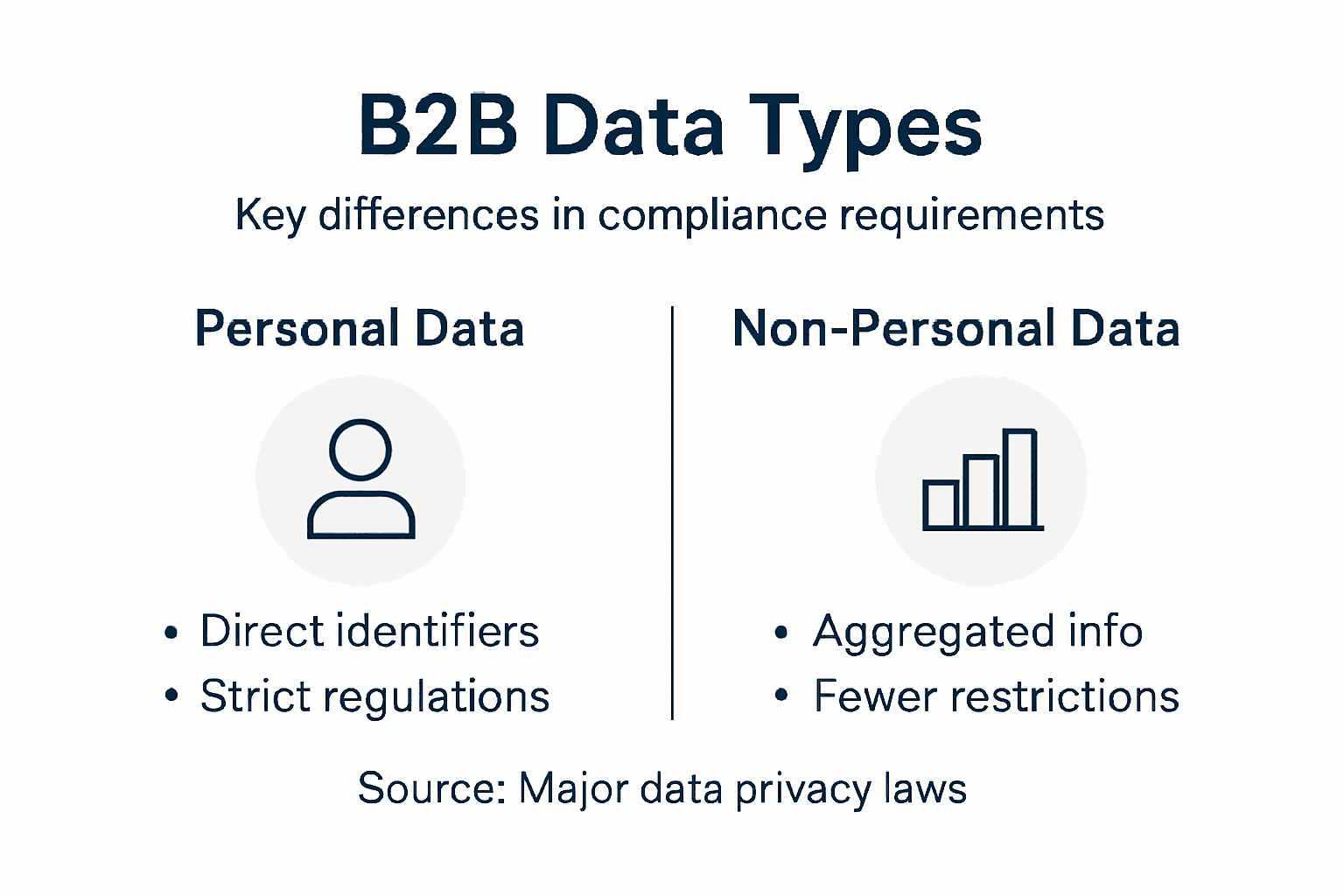
B2B data can be categorized into two fundamental types: personal data and non-personal data, each with distinct legal and ethical implications for sales and marketing professionals. Personal data specifically identifies individual professionals, including names, email addresses, job titles, and direct contact information, while non-personal data refers to broader organizational details about companies.
B2B data privacy regulations distinguish between these data types with critical compliance requirements. Personal data demands more stringent protection under frameworks like GDPR and CCPA, necessitating explicit consent and robust security measures. Non-personal data, while less regulated, still requires careful handling to maintain professional integrity and prevent potential privacy breaches.
The key differences between personal and non-personal B2B data include:- Personal Data: Directly identifies specific individuals- Requires explicit consent for use- Subject to strict privacy regulations- Includes personal email addresses, phone numbers, LinkedIn profiles- Non-Personal Data: Describes organizational characteristics- Generally less regulated- Includes company size, industry, location, website, general contact information- Provides broader market insights without individual identification
Pro Tip: Always maintain a clear separation between personal and non-personal data in your sales databases to ensure compliance and protect individual privacy.
Here is a side-by-side comparison of personal and non-personal B2B data, highlighting regulatory and business implications:
| Attribute | Personal B2B Data | Non-Personal B2B Data |
|---|---|---|
| Privacy Regulation Level | Very high, strict requirements | Moderate, less direct impact |
| Consent Needed | Explicit, well documented | Often implicit or not needed |
| Example Data Points | Email, name, job title | Company name, industry, size |
| Impact on Sales Outreach | High risk, requires permission | Lower risk, broader targeting |
Legal Frameworks Shaping B2B Data Compliance
B2B data compliance is governed by a complex network of international legal frameworks that define critical standards for data collection, processing, and protection. These regulatory environments establish comprehensive guidelines that organizations must navigate to ensure ethical and legal data management in professional contexts.

Data sharing regulations have evolved significantly, with key frameworks emerging from different global jurisdictions. The European Union’s General Data Protection Regulation (GDPR) remains the most influential, setting stringent standards for data privacy and protection that many other regions now emulate. In the United States, sector-specific regulations like the California Consumer Privacy Act (CCPA) provide additional layers of protection for business data interactions.
The primary legal frameworks impacting B2B data compliance include:- GDPR (European Union): Comprehensive data protection regulation- CCPA/CPRA (California, US): Consumer privacy rights legislation- HIPAA (United States): Healthcare data protection standards- Data Act (European Union): Governing business-to-business data sharing- Industry-Specific Regulations: Tailored compliance requirements for financial, healthcare, and technology sectors
Pro Tip: Conduct an annual compliance audit to ensure your data collection and management practices align with the most current legal requirements across relevant jurisdictions.
Best Practices for Data Collection and Validation
Effective B2B data collection and validation require a strategic, multi-layered approach that balances comprehensive information gathering with rigorous compliance standards. Organizations must develop systematic processes that ensure data accuracy, reliability, and legal conformity throughout their sales and marketing operations.
B2B data governance practices emphasize the critical importance of implementing robust validation protocols. This involves creating structured verification mechanisms that authenticate data sources, cross-reference information, and maintain ongoing data quality control. Successful implementation requires a combination of technological tools and human oversight to minimize errors and potential compliance risks.
Key best practices for data collection and validation include:- Source Verification: Confirm the legitimacy and credibility of data origins- Consent Documentation: Maintain clear records of data acquisition permissions- Regular Data Audits: Conduct periodic reviews to identify and remove outdated information- Multi-Point Validation: Cross-reference data across multiple reliable sources- Secure Storage: Implement encrypted, compliant data management systems- Continuous Update Mechanisms: Develop processes for real-time data refresh and accuracy maintenance
Pro Tip: Implement an automated quarterly data validation system that flags and removes outdated or incorrect contact information to maintain high-quality B2B databases.
The table below summarizes best practices for collecting and validating B2B data alongside their business benefits:
| Practice | Description | Business Impact |
|---|---|---|
| Source Verification | Check data origin credibility | Reduces risk, builds trust |
| Consent Documentation | Keep records of permission | Avoids fines, ensures compliance |
| Data Audits | Review and update records regularly | Maintains accuracy, improves ROI |
| Secure Storage | Encrypt and protect collected data | Prevents breaches, supports trust |
Risks, Liabilities, and Avoiding Non-Compliance
Non-compliance in B2B data management represents a significant operational and financial risk for organizations, with potential consequences extending far beyond simple regulatory penalties. Companies that mishandle data collection, storage, or usage can face substantial legal challenges, financial sanctions, and irreparable damage to their professional reputation.
The landscape of legal risks in B2B data management is complex and multifaceted. Potential liabilities include substantial financial penalties, which can range from thousands to millions of dollars depending on the severity and scale of the violation. Beyond monetary consequences, organizations may encounter:- Legal Prosecution: Potential lawsuits from affected parties- Regulatory Sanctions: Fines and restrictions from government agencies- Business Reputation Damage: Loss of trust among professional networks- Operational Disruptions: Mandatory data deletion or business practice modifications- Professional Credibility Impact: Reduced market standing and client confidence
Key strategies for mitigating non-compliance risks involve developing comprehensive internal protocols that prioritize data protection and regulatory adherence. This requires creating robust documentation processes, implementing regular compliance training, establishing clear data handling guidelines, and maintaining transparent communication channels for consent and data management.
Pro Tip: Develop a dedicated compliance review board that conducts quarterly assessments of your data management practices to proactively identify and address potential regulatory risks.
Choosing Reliable B2B Data Providers
Selecting a trustworthy B2B data provider is a critical decision that directly impacts the effectiveness and compliance of sales and marketing strategies. Organizations must evaluate potential data partners through a comprehensive lens that considers data quality, legal compliance, verification processes, and overall reliability.
B2B database management strategies reveal that successful data procurement depends on rigorous assessment criteria. Key evaluation parameters include the provider’s data sourcing methodology, frequency of data updates, verification protocols, and demonstrated commitment to regulatory compliance across different jurisdictions.
Critical factors to consider when choosing a B2B data provider include:- Data Accuracy Rate: Verifiable percentage of current and correct information- Update Frequency: How often data is refreshed and validated- Compliance Certifications: Documented adherence to GDPR, CCPA, and other regulations- Data Source Transparency: Clear documentation of information collection methods- Segmentation Capabilities: Ability to provide targeted, niche-specific data- Privacy and Security Protocols: Robust mechanisms protecting collected information
Pro Tip: Request a sample dataset and conduct a detailed accuracy audit before committing to a long-term B2B data provider partnership.
Unlock Compliant B2B Data for Smarter Sales Outreach
Navigating the complex world of B2B data compliance can be challenging. Without verified, consent-driven contact information, outreach efforts risk legal pitfalls and wasted resources. This article highlights the importance of trustworthy data sources, clear consent documentation, and regular data validation to keep your sales campaigns both effective and compliant. If you want to avoid costly fines and build genuine professional relationships, having transparent, verified, and compliant B2B leads is essential.
Take control of your outreach with We handle the leads, you close the deals. – DataFacilitator and experience how detailed, targeted datasets aligned with strict privacy standards transform cold outreach into conversion opportunities.
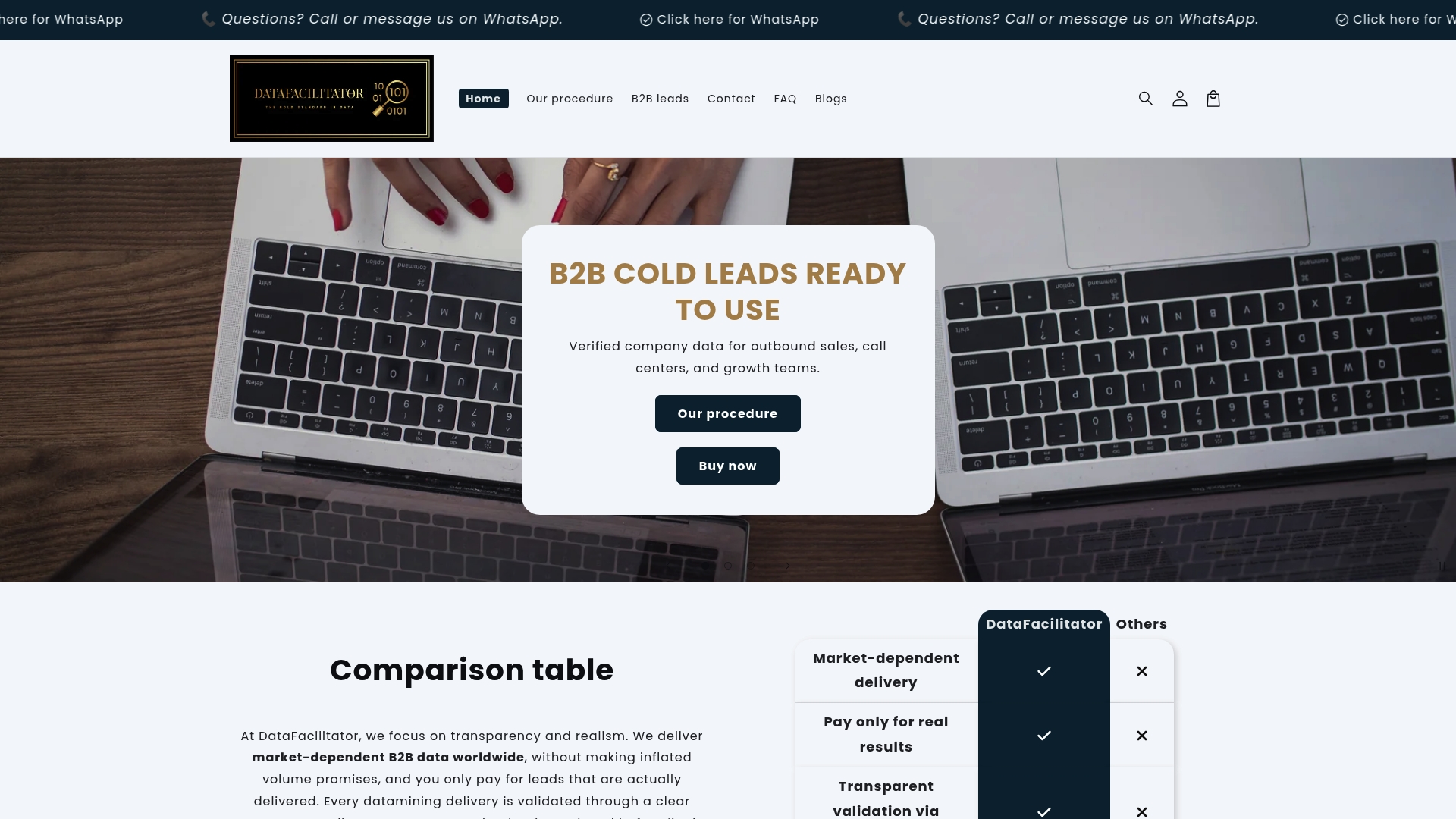
Boost your sales team’s confidence by choosing a partner committed to delivering real-time verified and legally compliant contact lists tailored to your market needs. Visit https://datafacilitator.com now to explore our offerings and start driving scalable growth with accuracy and legal soundness. For an all-in-one solution, check out our We handle the leads, you close the deals. – DataFacilitator collection and see your outreach results improve today.
Frequently Asked Questions
What are compliant B2B data standards?
Compliant B2B data standards are ethical and legal guidelines for the collection, processing, and usage of business contact information. They ensure that organizations manage data responsibly and adhere to privacy regulations.
Why is consent important in B2B data collection?
Consent is crucial because it legally protects both parties involved. Organizations must obtain explicit permission to use personal data, ensuring compliance with privacy regulations like GDPR and CCPA.
How can businesses ensure the quality of their B2B data?
To ensure data quality, businesses should implement regular data audits, source verification processes, and continuous updates to their databases. These practices help maintain accuracy and compliance.
What are the risks of non-compliance in B2B data management?
Non-compliance can lead to significant legal consequences, including hefty fines, lawsuits, regulatory sanctions, and reputational damage. Organizations must prioritize adherence to data protection laws to mitigate these risks.