


Building a strong outbound campaign often feels like threading a needle while the clock is ticking. For European B2B sales and marketing managers, connecting with the right decision-makers depends on strategic data utilization and hyper-targeted communication. Careful segmentation and high-quality prospect profiles can transform scattered outreach into valuable business conversations. This guide breaks down the fundamentals and actionable tactics for data-driven B2B campaigns that support more reliable lead generation and improved outreach efficiency.
Table of Contents
- B2B Data and Outbound Campaign Fundamentals
- Essential Types of B2B Data for Outreach
- How Segmentation and Data Quality Shape Campaigns
- Compliance, Data Privacy, and Legal Standards
- Common Mistakes in B2B Data Usage
Key Takeaways
| Point | Details |
|---|---|
| Target Audience Definition | Precise identification of potential clients is crucial for successful B2B outreach. Focus on specific industries, company sizes, and key decision-makers. |
| Data Quality and Validation | High-quality, verified data is essential for effective campaigns. Implementing quarterly validation helps maintain accuracy and relevance. |
| Effective Segmentation | Using segmentation strategies, such as firmographic and behavioral, enhances targeting and improves engagement rates. Tailor messaging to suit specific business needs. |
| Compliance Awareness | Adhere to data privacy regulations and ensure proper consent for data use to avoid legal complications and uphold trust with potential clients. |
B2B Data and Outbound Campaign Fundamentals
Successful B2B outbound campaigns rely on strategic data utilization and targeted communication. Companies seeking growth must understand the core principles of data-driven outreach to connect effectively with potential business clients. Targeted marketing strategies transform cold contacts into meaningful business opportunities.
The foundation of an effective B2B outbound campaign involves several critical components:
- Precise Target Audience Definition: Identifying specific industries, company sizes, and decision-maker roles
- High-Quality Data Acquisition: Collecting accurate and verified business contact information
- Personalized Communication Approach: Crafting messages tailored to specific business needs
- Multi-Channel Engagement Strategy: Combining email, phone, and social media outreach
Data quality remains paramount in these campaigns. Without accurate information, outreach efforts become scattered and inefficient. Businesses must invest in robust data collection methods that provide comprehensive insights into potential client profiles, including company size, revenue, technological infrastructure, and specific pain points.
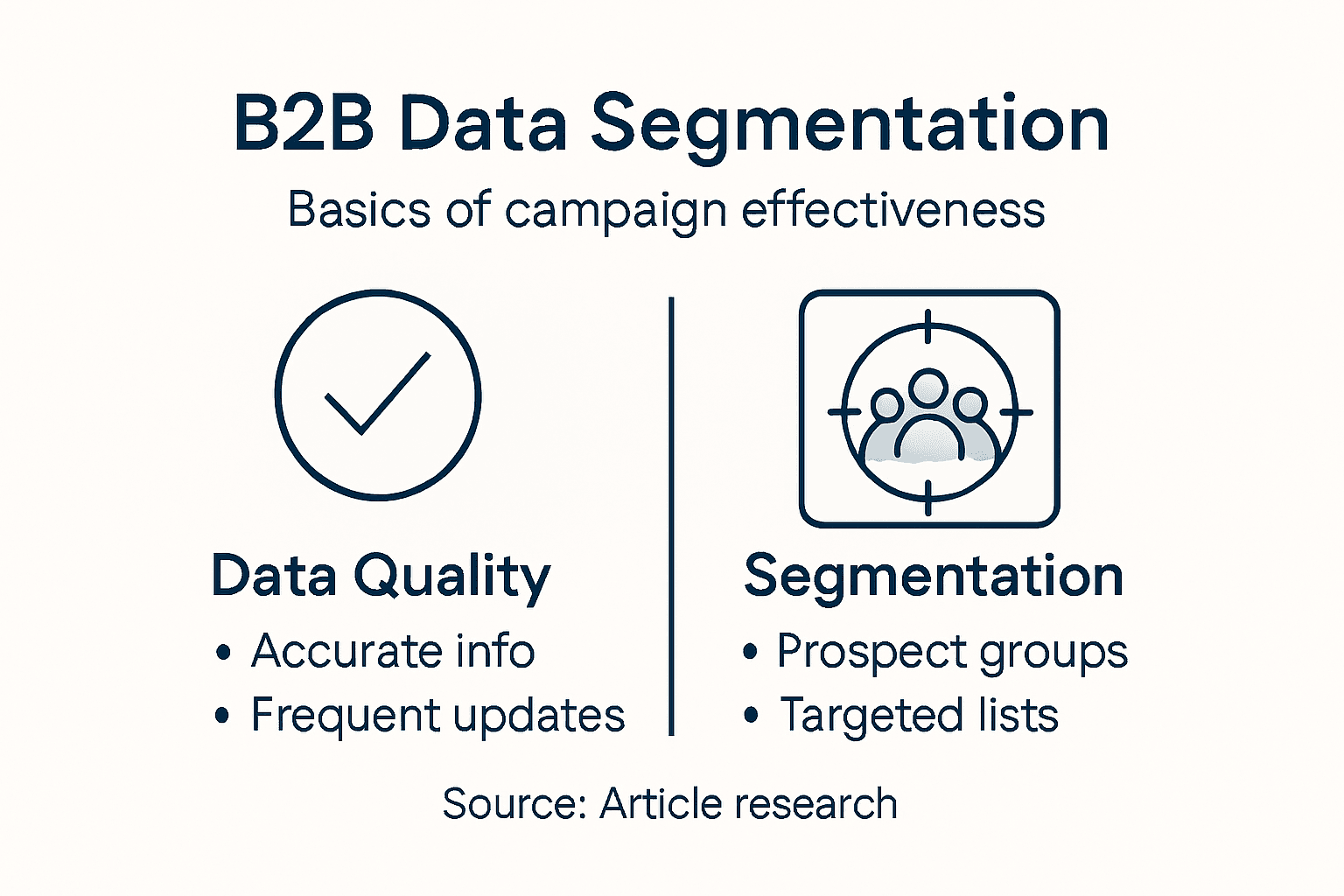
Segmentation plays a crucial role in maximizing campaign effectiveness. By dividing prospect lists into granular categories, sales teams can develop hyper-targeted messaging that resonates with specific business segments. This approach dramatically improves response rates and conversion potential.
Pro tip: Always validate and refresh your B2B contact data quarterly to maintain accuracy and relevance in your outbound campaigns.
Essential Types of B2B Data for Outreach
Effective B2B outreach depends on leveraging multiple data types that provide comprehensive insights into potential business clients. Comprehensive B2B data categories enable sales and marketing teams to craft precisely targeted communication strategies that resonate with specific business needs.
The most critical types of B2B data include:
- Firmographic Data: Company attributes such as industry, size, revenue, location
- Contact Data: Individual professional details including name, role, email, phone number
- Technographic Data: Information about technological infrastructure and software usage
- Behavioral Intent Signals: Online behaviors indicating potential purchase readiness
- Hiring Data: Insights into company growth, expansion, and emerging needs
Each data category serves a unique purpose in building a comprehensive prospect profile. Firmographic data helps segment markets and identify ideal customer profiles, while contact data provides direct communication channels. Technographic insights reveal potential compatibility with your product or service, enabling more nuanced and relevant outreach.
Here’s a quick overview of how different B2B data types contribute to campaign effectiveness:
| Data Type | Main Advantage | Typical Usage |
|---|---|---|
| Firmographic | Refines lead targeting | Identifies ideal companies |
| Contact | Enables direct communication | Reaches decision makers |
| Technographic | Reveals tech compatibility | Tailors product messaging |
| Behavioral Intent | Indicates sales readiness | Prioritizes warm leads |
| Hiring | Spots growth opportunities | Times outreach effectively |
Modern B2B data strategies require continuous refinement and validation. Companies must invest in reliable data sources that offer real-time updates and maintain strict compliance with privacy regulations. The goal is not just collecting information, but creating actionable intelligence that transforms cold outreach into meaningful business opportunities.
Pro tip: Regularly cross-reference and validate your B2B data across multiple sources to ensure maximum accuracy and reliability.
How Segmentation and Data Quality Shape Campaigns
Successful B2B outbound campaigns are fundamentally built on two critical pillars: precise data segmentation and unwavering data quality. Segmenting B2B lists transforms generic contact databases into strategic targeting tools that dramatically improve campaign performance.
Effective segmentation involves breaking down prospect lists into meaningful categories:
- Firmographic Segmentation: Grouping by company size, industry, revenue, location
- Technographic Segmentation: Categorizing by technology stack, software usage
- Behavioral Segmentation: Clustering based on engagement patterns, online interactions
- Geographic Segmentation: Dividing prospects by regional or national boundaries
- Psychographic Segmentation: Analyzing organizational culture and decision-making styles
Data quality acts as the foundation for these segmentation strategies. Inaccurate data can derail entire marketing efforts, leading to wasted resources and missed opportunities. Companies must implement rigorous validation processes that continuously verify and update contact information, ensuring each segment represents real, actionable business prospects.

The intersection of precise segmentation and high-quality data creates a powerful framework for targeted outreach. By understanding nuanced differences between prospect groups, sales teams can craft hyper-personalized messages that resonate with specific business needs, significantly improving conversion rates and engagement metrics.
Pro tip: Implement a quarterly data validation process that cross-references multiple sources to maintain segment accuracy and reliability.
Compliance, Data Privacy, and Legal Standards
B2B outbound campaigns must navigate complex legal landscapes, with data privacy regulations becoming increasingly stringent. European data protection principles fundamentally reshape how businesses collect, process, and utilize company contact information.
Key compliance considerations for B2B data management include:
- Consent Requirements: Ensuring explicit permission for data usage
- Data Minimization: Collecting only necessary contact information
- Purpose Limitation: Using data exclusively for intended business purposes
- Storage Restrictions: Maintaining accurate and time-limited contact records
- Cross-Border Data Transfer Rules: Adhering to international privacy regulations
Legal frameworks like the General Data Protection Regulation (GDPR) impose strict guidelines on data handling. Companies must implement robust mechanisms to verify data sources, maintain transparent communication practices, and provide clear opt-out mechanisms for contacts. Failure to comply can result in substantial financial penalties and significant reputational damage.
Modern B2B data strategies require a proactive approach to legal compliance. This means developing comprehensive data governance protocols that balance effective marketing objectives with individual privacy rights. Organizations must continuously audit their data collection and usage practices, ensuring alignment with evolving regulatory standards.
Pro tip: Develop a comprehensive data compliance checklist that gets reviewed quarterly by legal and marketing teams.
Common Mistakes in B2B Data Usage
Navigating B2B data management requires precision and strategic awareness. B2B data appending mistakes can critically undermine marketing and sales efforts, transforming potentially valuable contact information into a liability.
The most prevalent errors in B2B data usage include:
- Incomplete Data Collection: Gathering partial or fragmented contact information
- Outdated Contact Details: Failing to regularly update and verify records
- Inconsistent Data Formatting: Using non-standardized entry protocols
- Lack of Data Validation: Neglecting systematic verification processes
- Over-Collection of Irrelevant Information: Accumulating unnecessary data points
Data quality degradation occurs through multiple channels. Sales teams often perpetuate these mistakes by treating databases as static resources instead of dynamic, living ecosystems that require constant maintenance and strategic refinement. Inaccurate or incomplete data can lead to misguided targeting, wasted resources, and diminished campaign effectiveness.
Successful organizations implement robust data management protocols that prioritize accuracy, relevance, and continuous improvement. This involves creating systematic approaches for data collection, regular audits, and implementing advanced validation technologies that can automatically detect and correct potential inconsistencies.
The following table summarizes the business impact of common B2B data management mistakes:
| Mistake | Business Impact | Prevention Strategy |
|---|---|---|
| Incomplete Data Collection | Missed sales opportunities | Strict data entry protocols |
| Outdated Contact Details | Higher bounce and opt-out rates | Frequent database updates |
| Inconsistent Formatting | Integration and syncing issues | Apply standard templates |
| Lack of Data Validation | Wasted campaign resources | Automated validation tools |
| Over-Collecting Data | Potential compliance violations | Limit to relevant fields |
Pro tip: Establish a quarterly data hygiene review process that includes comprehensive validation, cleaning, and reconciliation of your B2B contact databases.
Unlock Targeted Growth with Precision B2B Data
Struggling to transform cold outreach into real business growth due to poor data quality or lack of segmentation Your outbound campaigns demand highly accurate and personalized B2B contact lists that reflect real prospects with verified details like company size, industry, and decision-maker roles DataFacilitator.com specializes in delivering just that — scalable and compliant datasets tailored to your specific niche and region so you focus on closing deals while we handle the leads
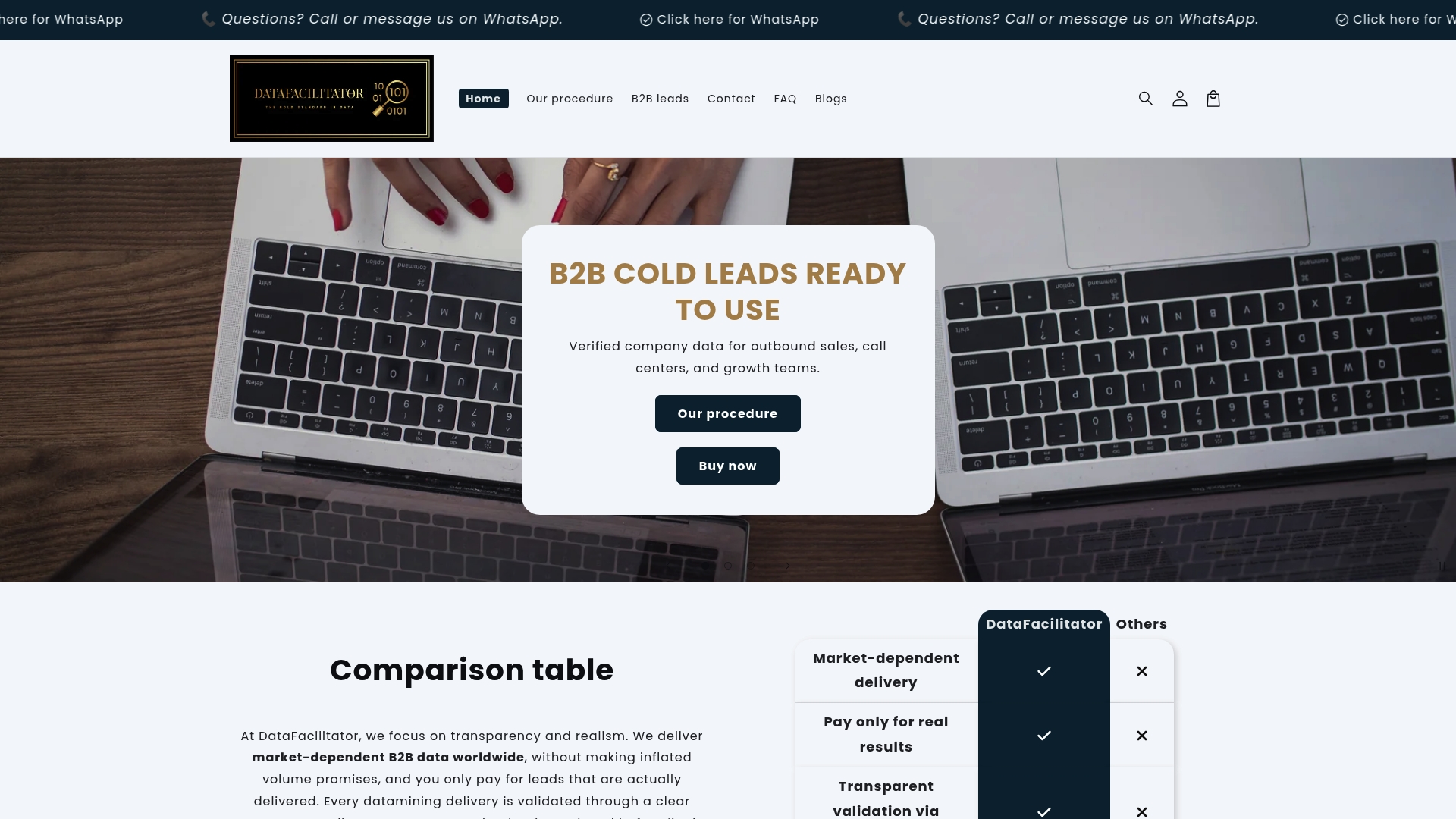
Discover how structured and continuously validated B2B data can revolutionize your outreach by improving response rates and campaign ROI Explore our extensive collection of targeted leads at We handle the leads, you close the deals. – DataFacilitator or browse diverse datasets on our frontpage collection When you partner with DataFacilitator.com you gain access to transparent, pay-per-result services designed to support data-driven growth strategies Visit https://datafacilitator.com now to elevate your outbound campaigns and connect with the right business prospects today
Frequently Asked Questions
What is B2B data, and why is it important for outbound campaigns?
B2B data refers to business-to-business information such as company attributes and contact details that organizations use to target potential clients. It’s crucial for outbound campaigns as it helps refine targeting, personalize communication, and enhance the effectiveness of outreach.
How can companies ensure the quality of their B2B data?
Companies can ensure data quality by regularly validating and updating their contact information, using reliable data sources, and implementing systematic verification processes to maintain accuracy and relevance.
What types of B2B data should be collected for effective outreach?
Key types of B2B data include firmographic data (company details), contact data (individual details such as names and emails), technographic data (technology usage), behavioral intent signals (online behaviors), and hiring data (insights about company growth).
How does segmentation improve the success of outbound campaigns?
Segmentation allows companies to categorize prospects based on criteria like firmographics and behaviors, enabling them to craft targeted messages that resonate with specific business segments. This approach significantly enhances response rates and conversion potential.