


Every sales manager knows that one misstep with prospect data can derail months of hard work. The reality is that compliant lead generation is not just a regulatory requirement but a cornerstone of building trust with potential clients and partners. For teams in the Netherlands navigating ethical cold outreach, understanding how to balance opportunity with obligation gives your strategy credibility and resilience. You will discover what sets compliant lead generation apart and how it supports both ethical prospecting and business growth.
Table of Contents
- What Is Compliant Lead Generation?
- Types of Lead Generation Methods
- Key Features of Compliance in B2B Data
- GDPR and International Data Regulations
- Practical Steps for Ethical Prospecting
- Risks, Liabilities, and Cost Implications
Key Takeaways
| Point | Details |
|---|---|
| Compliant Lead Generation | Focus on ethical data collection, explicit consent, and transparency to ensure legal compliance and individual privacy protection. |
| Types of Lead Generation | Utilize a blend of inbound and outbound strategies to attract prospects while adhering to compliance requirements. |
| B2B Data Compliance | Implement robust data management practices, including accurate record-keeping and adherence to regulations like GDPR, to safeguard individual rights. |
| Risks and Costs | Recognize that non-compliance poses substantial financial and reputational risks, necessitating ongoing monitoring and proactive risk management strategies. |
What Is Compliant Lead Generation?
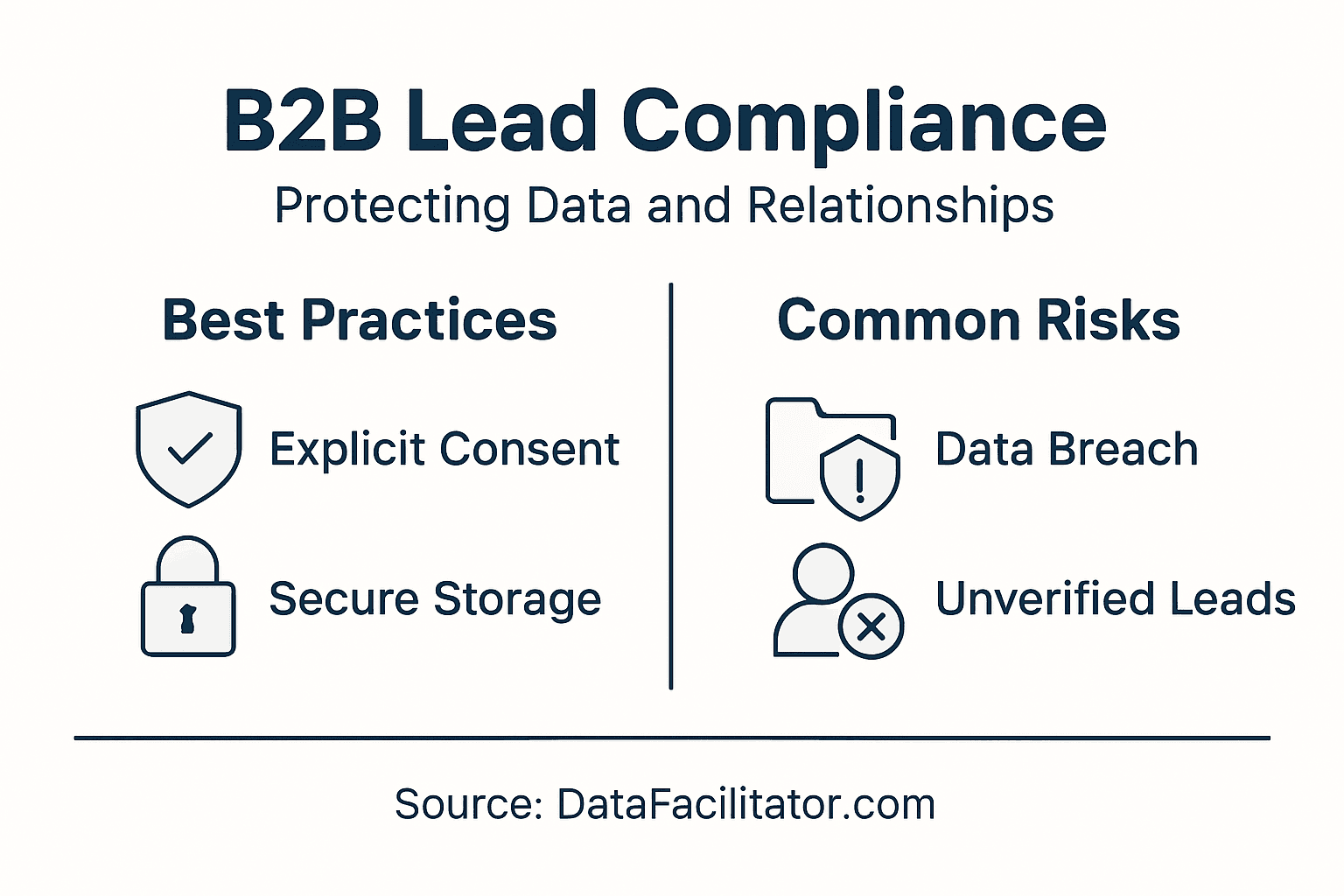
Compliant lead generation represents a strategic approach to acquiring potential business contacts while rigorously protecting individual privacy rights and adhering to legal data protection standards. At its core, this process involves collecting and utilizing prospect information through transparent and ethical methods that respect legal frameworks and individual consent.
The practice fundamentally differs from traditional lead generation by prioritizing data privacy and legal compliance. Responsible data handling strategies now require businesses to implement robust mechanisms that protect personal information and provide clear opt-out opportunities.
Key characteristics of compliant lead generation include:
- Obtaining explicit consent before data collection
- Maintaining transparent communication about data usage
- Implementing secure data storage and processing protocols
- Providing easy mechanisms for data subject rights management
- Ensuring data is collected for specific, legitimate business purposes
In the B2B context, compliance becomes particularly nuanced. While business contact data often faces fewer restrictions compared to personal consumer information, organizations must still demonstrate responsible data management practices. This means verifying data sources, maintaining accurate records, and respecting professional communication boundaries.
Pro tip: Conduct a quarterly audit of your lead generation processes to ensure ongoing compliance with evolving data protection regulations.
Types of Lead Generation Methods
Lead generation methods encompass a diverse range of strategies designed to identify and attract potential business prospects through various channels and techniques. Regulatory compliance underpins all lead generation approaches, ensuring that businesses maintain ethical standards while pursuing new opportunities.
The primary lead generation methods can be categorized into two broad approaches: inbound and outbound strategies. Inbound methods focus on attracting potential leads through valuable content, digital marketing, and organic engagement, while outbound tactics involve more direct outreach and proactive contact initiation.
Key lead generation methods include:
-
Digital Marketing Channels
- Content marketing
- Search engine optimization (SEO)
- Social media engagement
- Webinars and online events
- Pay-per-click advertising
-
Direct Outreach Techniques
- Cold calling
- Email marketing campaigns
- Professional networking
- Industry conference participation
- LinkedIn prospecting
Each method requires careful implementation to maintain compliance and effectiveness. Digital channels demand sophisticated targeting and consent management, while direct outreach methods necessitate precise communication protocols and respect for professional boundaries.
The most successful lead generation strategies integrate multiple approaches, creating a comprehensive ecosystem that balances technological capabilities with human-centered relationship building. This holistic approach allows businesses to maximize their prospecting efforts while maintaining legal and ethical standards.
Here’s a comparison of inbound and outbound lead generation strategies in terms of compliance and impact:
| Approach | Compliance Complexity | Lead Quality | Typical Channels |
|---|---|---|---|
| Inbound | Moderate to high | Often higher | Content, SEO, social media |
| Outbound | High | Varies | Cold calling, email, events |
| Multi-channel | Highest | Broadest reach | Combines multiple methods |
Pro tip: Develop a multi-channel lead generation strategy that cross-references and validates potential leads across different platforms to improve accuracy and compliance.
Key Features of Compliance in B2B Data
Compliance in B2B data represents a sophisticated framework of legal and ethical practices designed to protect both businesses and individual professionals during lead generation processes. Ethical data handling requires comprehensive verification strategies, ensuring that every interaction meets stringent regulatory standards and respects professional boundaries.

The core features of B2B data compliance encompass a multifaceted approach to data management, focusing on transparency, accuracy, and individual rights protection. Consent management emerges as a critical element, requiring businesses to obtain explicit permission and maintain clear documentation of how and why contact information is being used.
Key compliance features include:
-
Data Acquisition Standards
- Explicit consent documentation
- Transparent communication about data usage
- Verifiable source of contact information
- Clear opt-out mechanisms
- Accurate representation of professional details
-
Regulatory Compliance Requirements
- GDPR alignment
- Data retention limitations
- Secure data processing protocols
- Individual rights protection
- Regular data accuracy audits
Successful B2B data compliance demands a proactive approach that goes beyond mere legal checkbox completion. Organizations must develop robust internal processes that continuously validate and refresh their contact databases, ensuring ongoing accuracy and relevance.
The most sophisticated compliance strategies integrate technological solutions with human oversight, creating a dynamic ecosystem that adapts to changing regulatory landscapes and evolving professional communication standards.
Pro tip: Implement a quarterly data compliance review process that systematically validates consent, updates contact information, and ensures ongoing regulatory alignment.
GDPR and International Data Regulations
International data regulations represent a complex landscape of legal requirements designed to protect individual privacy and ensure responsible data management across global business operations. GDPR mandates comprehensive data protection standards, establishing a rigorous framework that extends far beyond European Union boundaries.
The General Data Protection Regulation (GDPR) serves as the cornerstone of modern data privacy legislation, introducing stringent requirements for businesses handling personal information. This regulation fundamentally transforms how organizations collect, process, store, and manage data, with a primary focus on transparency, consent, and individual rights protection.
Key international data regulation principles include:
-
Core GDPR Requirements
- Explicit consent for data collection
- Right to access personal data
- Right to be forgotten
- Data minimization
- Purpose limitation
-
Global Compliance Considerations
- Geographical data transfer restrictions
- Cross-border data processing protocols
- Individual privacy rights enforcement
- Transparent data handling practices
- Mandatory breach notification procedures
Businesses operating internationally must navigate a complex regulatory environment that extends beyond GDPR, incorporating additional frameworks like the California Consumer Privacy Act (CCPA) and other regional data protection laws. This requires a sophisticated, adaptable approach to data management that prioritizes individual privacy while maintaining operational efficiency.
The most successful organizations develop comprehensive compliance strategies that treat data protection as a fundamental business practice, not merely a legal requirement. This involves continuous monitoring, regular audits, and proactive adaptation to evolving regulatory landscapes.
Pro tip: Develop a centralized data governance framework that systematically tracks regulatory changes across different jurisdictions and automatically updates compliance protocols.
This table summarizes major global data regulations affecting B2B lead generation:
| Regulation | Region | Key Principle | Enforcement Risk Level |
|---|---|---|---|
| GDPR | European Union | Explicit consent required | Very high |
| CCPA | California, USA | Consumer data transparency | High |
| PIPEDA | Canada | Purpose limitation focus | Moderate |
| PDPA | Singapore | Cross-border data controls | Moderate |
Practical Steps for Ethical Prospecting
Ethical prospecting represents a strategic approach to lead generation that prioritizes professional respect, legal compliance, and transparent communication. Ethical lead generation requires systematic documentation, transforming traditional outreach methods into principled engagement strategies that protect both businesses and potential contacts.
The foundation of ethical prospecting involves developing a comprehensive framework that balances business objectives with individual privacy rights. This approach goes beyond mere legal compliance, emphasizing genuine value creation and mutual professional respect during the lead generation process.
Practical steps for maintaining ethical prospecting include:
-
Consent and Transparency
- Obtain explicit permission before data collection
- Clearly communicate data usage intentions
- Provide simple opt-out mechanisms
- Maintain detailed consent records
- Use clear, understandable language
-
Data Management Protocols
- Implement secure data storage systems
- Regularly audit contact information
- Validate data source legitimacy
- Protect personal and professional details
- Ensure data accuracy and relevance
Successful ethical prospecting requires a proactive approach that anticipates potential compliance challenges. Organizations must develop robust internal training programs that educate sales and marketing teams about privacy regulations, consent management, and professional communication standards.
Technology plays a crucial role in supporting ethical prospecting efforts, enabling businesses to automate consent tracking, implement sophisticated data protection mechanisms, and maintain transparent communication channels with potential leads.
Pro tip: Create a comprehensive compliance checklist that team members must complete before initiating any prospecting activities to ensure consistent ethical standards.
Risks, Liabilities, and Cost Implications
B2B lead generation carries substantial legal and financial risks that can significantly impact organizational stability and reputation. Non-compliance in lead generation poses significant financial dangers, creating potential exposure to costly litigation, regulatory penalties, and long-term business disruptions.
The financial landscape of data compliance involves complex calculations of direct and indirect costs associated with potential regulatory violations. These risks extend beyond immediate monetary penalties, encompassing broader implications such as reputational damage, loss of customer trust, and potential long-term market positioning challenges.
Key risk categories include:
-
Direct Financial Risks
- Regulatory fines and penalties
- Legal defense costs
- Potential litigation expenses
- Compliance remediation investments
- Data breach investigation costs
-
Indirect Organizational Risks
- Reputational damage
- Loss of business partnerships
- Decreased market credibility
- Reduced customer trust
- Potential revenue disruption
Organizations must recognize that compliance is not merely a legal checkbox but a strategic investment in sustainable business practices. The most effective risk mitigation strategies integrate proactive monitoring, continuous staff training, and robust technological safeguards that anticipate and prevent potential regulatory violations.
Technology plays a crucial role in managing these risks, offering advanced tools for consent tracking, data management, and automated compliance verification. By leveraging sophisticated compliance technologies, businesses can transform potential liabilities into opportunities for demonstrating professional integrity and responsible data management.
Pro tip: Conduct quarterly comprehensive risk assessments that evaluate your current data handling practices against the most recent regulatory requirements to preemptively identify and mitigate potential compliance vulnerabilities.
Secure Your B2B Outreach with Fully Compliant Lead Data
Navigating the complexities of compliant lead generation is essential for any business looking to build trust and maintain ethical prospecting standards. If you are striving to safeguard your outreach by acquiring transparent, verified, and GDPR-aligned data that respects professional boundaries, you are not alone. Key challenges include obtaining explicit consent, ensuring data accuracy, and preventing costly compliance risks.
At DataFacilitator.com, we specialize in delivering highly targeted, compliant B2B contact lists customized to your market and niche. Our pay-per-result approach guarantees you pay only for actual leads, supported by transparent data validation practices such as screen recordings before delivery. This means you can focus on connecting with the right prospects confidently while ensuring your data handling meets the highest legal and ethical standards. Explore how we handle leads so you can close deals: We handle the leads, you close the deals. – DataFacilitator.
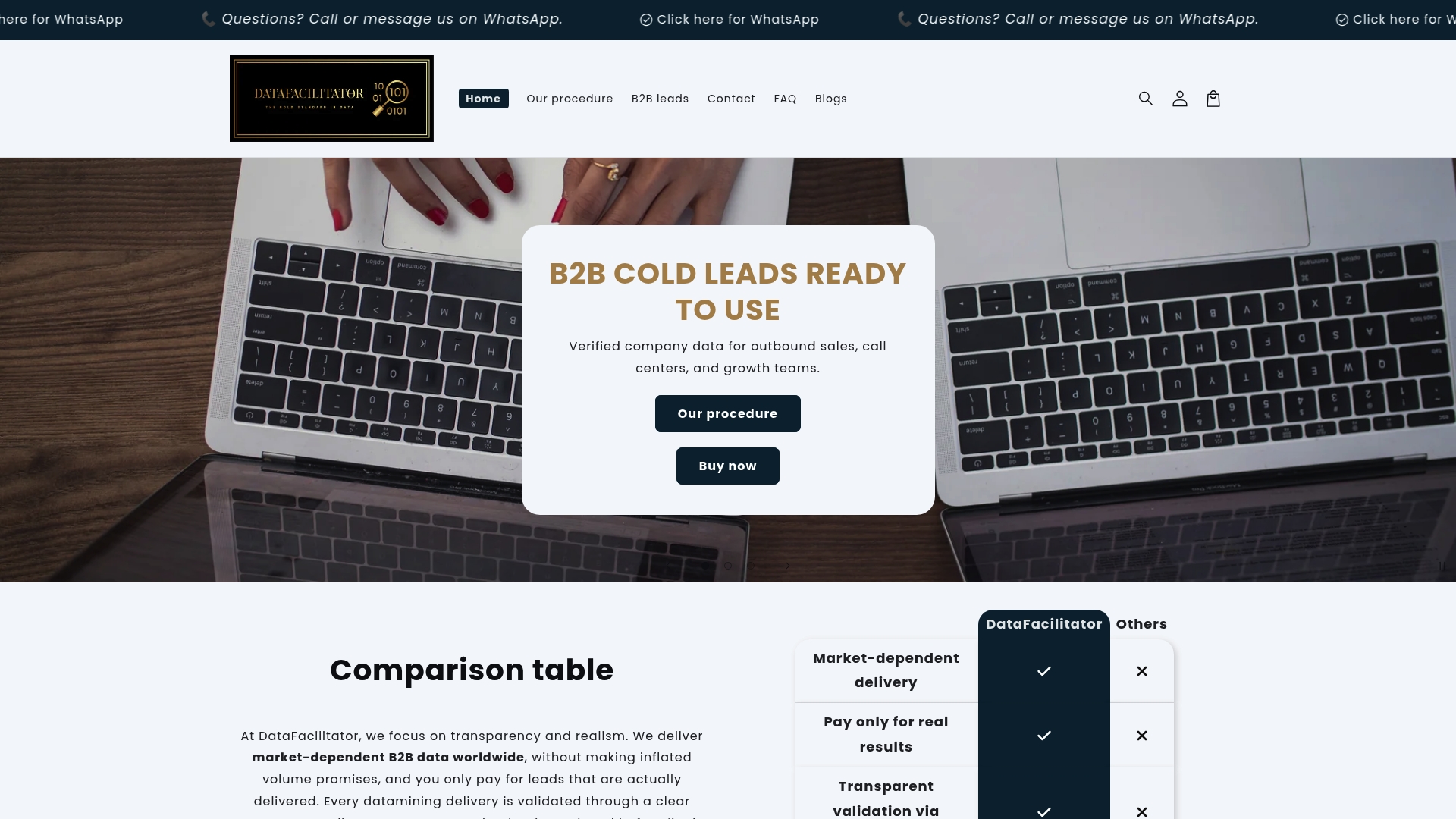
Take control of your outbound sales campaigns today with data designed for compliance and accuracy. Visit We handle the leads, you close the deals. – DataFacilitator for tailored solutions built to protect your business and drive growth. For a comprehensive overview of our services and commitment to quality, explore DataFacilitator.com. Your next compliant lead is just a click away.
Frequently Asked Questions
What is compliant lead generation?
Compliant lead generation is a strategic approach to acquiring potential business contacts while protecting individual privacy rights and adhering to legal data protection standards. It involves collecting and using prospect information through ethical methods that respect consent and transparency.
Why is compliance important in B2B lead generation?
Compliance is crucial in B2B lead generation as it protects organizations from legal risks and financial penalties. Ethical data handling strengthens trust with prospects and safeguards the company’s reputation.
What are key features of compliance in B2B data?
Key features include obtaining explicit consent, maintaining transparent communication about data usage, secure data processing, and providing clear opt-out mechanisms. Organizations must also comply with regulations like GDPR and ensure data accuracy.
How can businesses ensure ethical prospecting?
Businesses can ensure ethical prospecting by obtaining explicit permission for data collection, communicating clearly about data usage, maintaining accurate contact databases, and regularly auditing data sources to validate their legitimacy.