


Reaching out to new business prospects can feel overwhelming, especially when every contact is at a different stage of interest. Relying on guesswork often leads to lost time and wasted effort. You need a clear roadmap for turning strangers into sales opportunities.
This list breaks down the most effective types of B2B leads, from cold introductions to those ready to buy now. You will discover how each lead type fits into your sales strategy and the best approaches for engaging them. Get ready to learn practical methods that help you focus your efforts where they matter most and turn potential into real results.
Table of Contents
- 1. Understanding Cold Leads And Their Value
- 2. Warm Leads For Faster Conversion Rates
- 3. Hot Leads: Recognizing Ready-To-Buy Prospects
- 4. Targeted Decision-Maker Leads For Effective Outreach
- 5. Industry-Specific Leads For Niche Campaigns
- 6. Geographically Segmented Leads For Local Expansion
- 7. Validated And Verified Leads For Reliable Results
Quick Summary
| Takeaway | Explanation |
|---|---|
| 1. Understand cold leads as opportunities. | Cold leads represent untapped prospects needing strategic outreach for potential conversion and business growth. |
| 2. Prioritize warm leads for quicker conversions. | Warm leads have shown interest and engagement, making them more likely to convert with targeted follow-up efforts. |
| 3. Act swiftly with hot leads. | Hot leads are highly engaged prospects ready to buy, requiring immediate and tailored communication for successful conversion. |
| 4. Target decision-makers for effective engagement. | Engaging decision-makers involves strategic targeting to influence key purchasing decisions within organizations. |
| 5. Validate leads to ensure data accuracy. | Validated leads provide reliable contact information, reducing wasted resources and improving sales efficiency through data verification. |
1. Understanding Cold Leads and Their Value
Cold leads represent potential business prospects who have not previously engaged with your company but match your ideal customer profile. Unlike warm or hot leads, these contacts require strategic outreach and personalized communication to transform initial interest into meaningful business opportunities.
In the B2B sales ecosystem, cold leads form the foundational layer of potential growth. They represent untapped markets and unexplored business relationships that can significantly expand your company’s revenue potential. B2B lead generation strategies depend heavily on effectively identifying and nurturing these initial contacts.
Key characteristics of cold leads include:
- No prior interaction with your company
- Matching your ideal customer demographic
- Limited existing knowledge about your products or services
- Potential for conversion through targeted outreach
Successful cold lead management requires a nuanced approach that balances persistence with strategic communication. Sales teams must craft personalized messages that demonstrate immediate value and relevance to the prospect’s specific business challenges.
Cold leads are not dead ends. They are opportunities waiting to be strategically unlocked.
Effective cold lead strategies involve:
- Comprehensive research about the target company
- Developing hyper-personalized communication approaches
- Creating value-driven initial contact points
- Implementing multi-channel engagement tactics
Pro tip: Invest in high-quality verified contact data to ensure your cold lead outreach targets genuinely relevant prospects with accurate information.
2. Warm Leads for Faster Conversion Rates
Warm leads represent potential customers who have already demonstrated some level of interest in your products or services. Unlike cold leads, these prospects have engaged with your marketing channels and show higher potential for conversion.
Understanding warm leads requires recognizing their unique position in the sales funnel. Outbound lead generation strategies play a critical role in effectively nurturing these prospects through targeted engagement.
Key characteristics of warm leads include:
- Demonstrated prior interaction with your brand
- Higher engagement levels compared to cold leads
- More receptive to personalized communication
- Increased likelihood of converting into customers
Tracking and nurturing warm leads involves strategic approaches that maintain ongoing communication and provide value. Sales development representatives use multiple touchpoints to keep these prospects engaged and moving through the sales pipeline.
Warm leads are not guaranteed sales but represent significant opportunities for targeted conversion efforts.
Effective warm lead management strategies involve:
- Implementing personalized content campaigns
- Using CRM software for detailed lead tracking
- Creating targeted follow-up communication
- Developing lead-specific value propositions
Pro tip: Develop a systematic lead scoring mechanism to prioritize and segment warm leads based on their engagement level and potential conversion probability.
3. Hot Leads: Recognizing Ready-to-Buy Prospects
Hot leads represent the most promising prospects in the B2B sales pipeline. These are potential customers who demonstrate clear buying intent and immediate readiness to make a purchasing decision within the next 30 to 90 days.
B2B lead sources play a critical role in identifying and qualifying these high-potential prospects. Hot leads distinguish themselves through specific behavioral and communication patterns that signal their advanced stage in the buying journey.
Key indicators of hot leads include:
- Active engagement with product demonstrations
- Specific questions about pricing and implementation
- Involvement of key decision-makers in discussions
- Expressed urgency to solve current business challenges
- Requesting detailed proposals or cost breakdowns
Rapid response is crucial when dealing with hot leads. Sales teams must prioritize these prospects and provide immediate, tailored communication that addresses their specific needs and pain points.
Hot leads represent immediate revenue opportunities that require swift and strategic engagement.
Successful hot lead conversion strategies involve:
- Implementing real-time lead tracking systems
- Creating personalized follow-up communication
- Providing comprehensive and timely information
- Aligning sales and marketing efforts
Pro tip: Develop a dedicated fast-track process for hot leads that ensures immediate response and personalized attention within two hours of initial contact.
4. Targeted Decision-Maker Leads for Effective Outreach
Targeted decision-maker leads represent the most valuable prospects in B2B sales engagement. These leads specifically involve professionals who possess the authority and budget to make critical purchasing decisions within their organizations.
B2B prospect lists are essential for identifying and reaching these high-impact leads effectively. Understanding the nuanced characteristics of decision-makers can dramatically improve your outreach success rates.
Key attributes of targeted decision-maker leads include:
- C-level executives and senior management
- Department heads with budget control
- Technical leaders responsible for strategic technology decisions
- Professionals with direct influence on purchasing processes
- Individuals with comprehensive understanding of organizational needs
Strategic targeting requires precision and research. Sales teams must develop comprehensive profiles that go beyond basic contact information and delve into the specific challenges and priorities of potential decision-makers.
Effective decision-maker leads are not just contacts. They are strategic pathways to meaningful business relationships.
Successful approaches for engaging decision-maker leads involve:
- Conducting thorough organizational research
- Developing personalized communication strategies
- Demonstrating clear value propositions
- Understanding specific industry challenges
Pro tip: Invest in advanced data enrichment techniques to build comprehensive profiles that reveal deeper insights about potential decision-makers beyond standard contact information.
5. Industry-Specific Leads for Niche Campaigns
Industry-specific leads represent highly targeted prospects within specialized market segments that demand nuanced understanding and tailored communication strategies. These leads require deep sector knowledge and precision targeting to generate meaningful engagement.
B2B list segmentation becomes critical when developing campaigns for niche industry verticals. Each sector possesses unique communication protocols, technological ecosystems, and decision-making dynamics that generic outreach strategies often miss.
Key characteristics of industry-specific leads include:
- Precise alignment with sector-specific pain points
- Understanding of complex operational challenges
- Recognition of industry-specific regulatory environments
- Awareness of technological adoption trends
- Familiarity with sector-specific buying behaviors
Strategic targeting demands deep sector expertise. Successful outreach requires moving beyond surface-level contact information and developing comprehensive understanding of industry-specific dynamics.
Niche campaigns are not about volume. They are about delivering precisely targeted value.
Effective approaches for industry-specific lead generation involve:
- Conducting comprehensive sector research
- Developing specialized communication frameworks
- Creating industry-tailored value propositions
- Demonstrating authentic sector understanding
Pro tip: Invest in continuous learning about your target industries to maintain relevance and develop communication strategies that resonate with sector-specific challenges and opportunities.
6. Geographically Segmented Leads for Local Expansion
Geographically segmented leads represent targeted prospects within specific regional markets, enabling businesses to develop hyper-localized sales and marketing approaches. These leads focus on understanding unique local business ecosystems and tailoring communication strategies accordingly.
Business list building strategies become exponentially more powerful when integrated with geographic precision. By understanding regional nuances, companies can create more relevant and compelling outreach campaigns.
Key characteristics of geographically segmented leads include:
- Precise location-based targeting
- Understanding of regional economic landscapes
- Awareness of local business cultural norms
- Recognition of region-specific regulatory environments
- Tailored communication approaches
Strategic geographic segmentation requires comprehensive research. Sales teams must develop deep insights into local market dynamics beyond surface-level demographic information.
Geographic segmentation transforms generic outreach into meaningful local conversations.
Effective approaches for geographically segmented lead generation involve:
- Conducting thorough regional market research
- Developing location-specific value propositions
- Understanding local economic indicators
- Creating culturally nuanced communication strategies
Pro tip: Invest in local intelligence gathering to understand regional business ecosystems and develop targeted engagement strategies that resonate with specific geographic markets.
7. Validated and Verified Leads for Reliable Results
Validated and verified leads represent the gold standard in B2B sales prospecting. These leads undergo rigorous data quality checks to ensure accuracy, relevance, and potential for successful conversion.
B2B data validation techniques are essential for building a reliable sales pipeline. By implementing comprehensive verification processes, companies can dramatically reduce wasted resources and improve overall sales efficiency.
Key characteristics of validated leads include:
- Confirmed contact information accuracy
- Verified company details and operational status
- Cross-referenced data from multiple reliable sources
- Authentic decision-maker contact information
- Current and active business profiles
Data verification mitigates significant business risks. Sales teams can eliminate the potential for costly mistakes caused by outdated or incorrect contact information.
Validated leads are not just contacts. They are strategic business intelligence assets.
Effective validation strategies involve:
- Implementing multi-source data cross-referencing
- Regular database cleansing and updates
- Using advanced verification technologies
- Conducting periodic manual quality checks
Pro tip: Develop a systematic data validation workflow that combines automated verification tools with periodic human review to maintain the highest possible data integrity and reliability.
Below is a comprehensive table summarizing the article about types of leads in B2B sales, their characteristics, and strategies for effective engagement.
| Lead Type | Characteristics | Engagement Strategies |
|---|---|---|
| Cold Leads | No prior contact with the company, matches target demographics. | Conduct research, personalize communication, and offer initial value-driven proposals. |
| Warm Leads | Interested in the company’s offerings, previous interactions. | Utilize CRM, send tailored content, and foster ongoing communication. |
| Hot Leads | Ready to purchase, displays explicit buying intent. | Respond promptly, customize follow-ups, and address specific requirements. |
| Decision-Maker Leads | Includes key authorities in business purchase decisions. | Develop in-depth profiles and tailored strategies to address organizational challenges. |
| Industry-Specific Leads | Focus on specialized market sectors and unique needs. | Employ expertise in sector nuances and create industry-specific propositions. |
| Geographically Segmented Leads | Centered on regional markets and local preferences. | Perform regional research and design communication respecting cultural norms. |
| Validated and Verified Leads | Verified data ensuring prospects are relevant and active. | Establish systematic validation processes and cross-reference data sources. |
Unlock the Power of Targeted B2B Leads for Your Sales Success
Generating the right types of B2B leads can feel overwhelming when you need to manage cold outreach, warm lead nurturing, and hot lead conversion all at once. You want verified, segmented, and actionable contact information that aligns with your strategic goals like decision-maker targeting and industry-specific campaigns. This article highlights exactly why using inaccurate or generic data stalls your growth and wastes precious sales time.
At DataFacilitator, we specialize in providing tailored B2B leads that empower your sales team to reach the right prospects with precision. Whether you need cold leads for broad market expansion or highly validated decision-maker contacts for quick wins, we handle the data complexity so you can focus on closing deals. Check out our curated selection of B2B leads and discover how we combine quality and compliance to fuel your outreach campaigns.
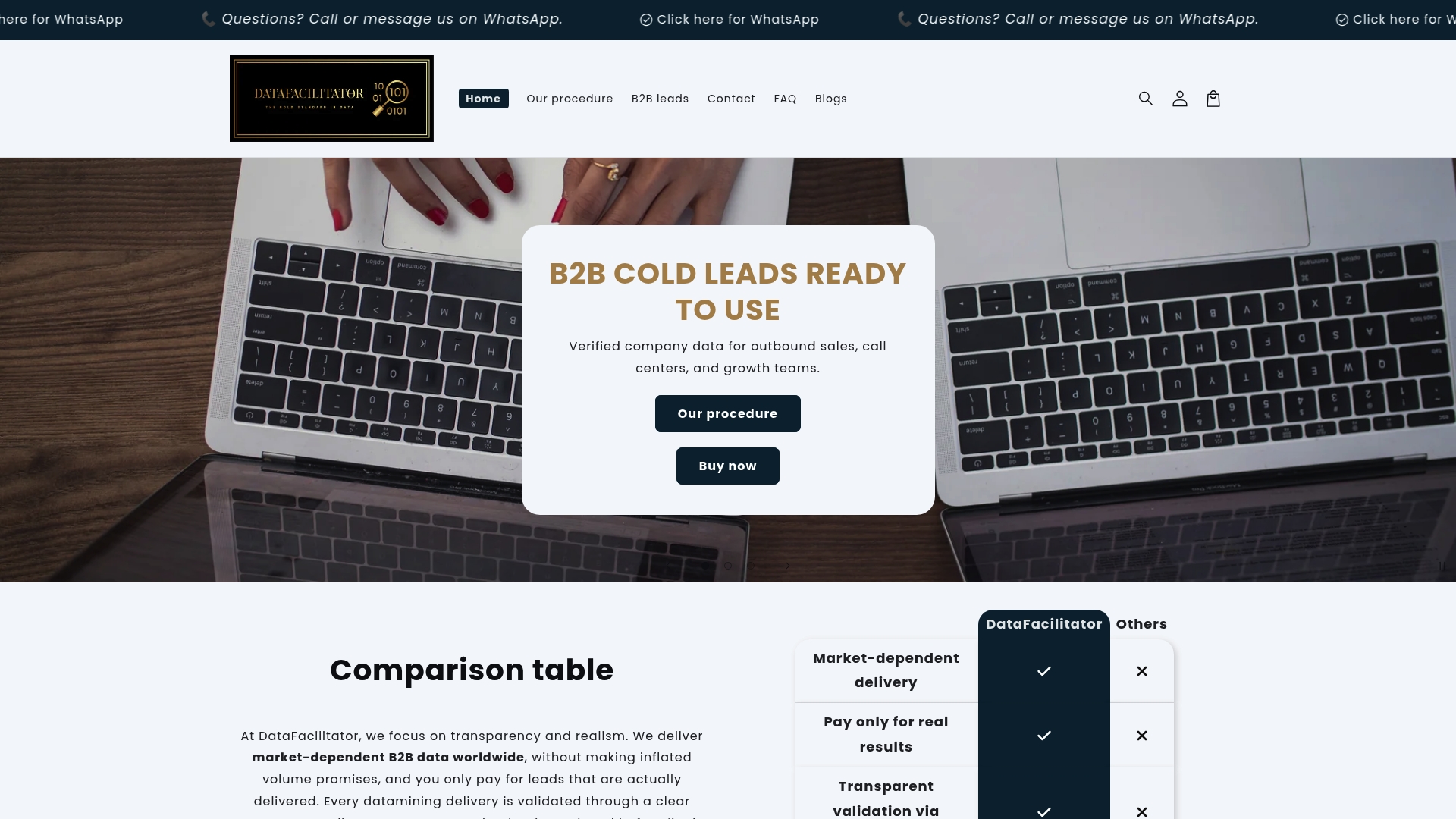
Ready to transform your sales outreach with accurate, scalable, and pay-per-result validated leads? Visit our homepage at DataFacilitator.com to explore how our solutions streamline your pipeline and accelerate conversions. Don’t let poor data slow down your growth. Start targeting smarter today with We handle the leads, you close the deals.
Frequently Asked Questions
What are cold leads and how can I effectively approach them?
Cold leads are potential customers who match your ideal demographic but have had no prior interaction with your company. To effectively approach cold leads, conduct comprehensive research on their needs and craft personalized outreach messages that highlight immediate value. Aim to engage these leads through targeted communication within the first few weeks.
How can I identify warm leads in my sales process?
Warm leads have previously interacted with your brand and show higher engagement levels than cold leads. To identify them, monitor interactions such as website visits, email responses, or social media engagements, and prioritize follow-up communications based on their activity. Implement a lead scoring system to categorize their interest levels and focus on the most engaged prospects.
What characteristics define hot leads, and how can I convert them quickly?
Hot leads are prospects ready to make a buying decision within the next 30 to 90 days, showing clear interest and urgency. To convert hot leads quickly, respond to their inquiries promptly with tailored solutions that address their specific challenges. Establish a fast-track response process that ensures you connect with them within two hours of initial contact.
How do I pinpoint targeted decision-maker leads for my outreach?
Targeted decision-maker leads are high-impact prospects who possess the authority to make purchasing decisions. Identify them by researching organizational hierarchies and job roles to find individuals who are likely to influence purchasing processes. Develop tailored communications that resonate with their priorities and needs to enhance outreach effectiveness.
What strategies should I use for engaging industry-specific leads?
Engaging industry-specific leads requires a deep understanding of sector challenges and tailored messaging. Conduct in-depth research to understand the unique pain points of the industry and develop specialized value propositions that address these concerns directly. Aim to create campaigns that genuinely resonate with the specific audience, increasing engagement success rates.
How can I ensure my leads are validated and reliable?
Validated leads have undergone rigorous checks for accuracy and relevance. To ensure reliability, implement a systematic validation process that includes verifying contact information, cross-referencing data from multiple sources, and regularly cleansing your database. Maintain high data integrity to improve outreach outcomes and reduce wasted marketing resources.